








News & Stories
2021
News
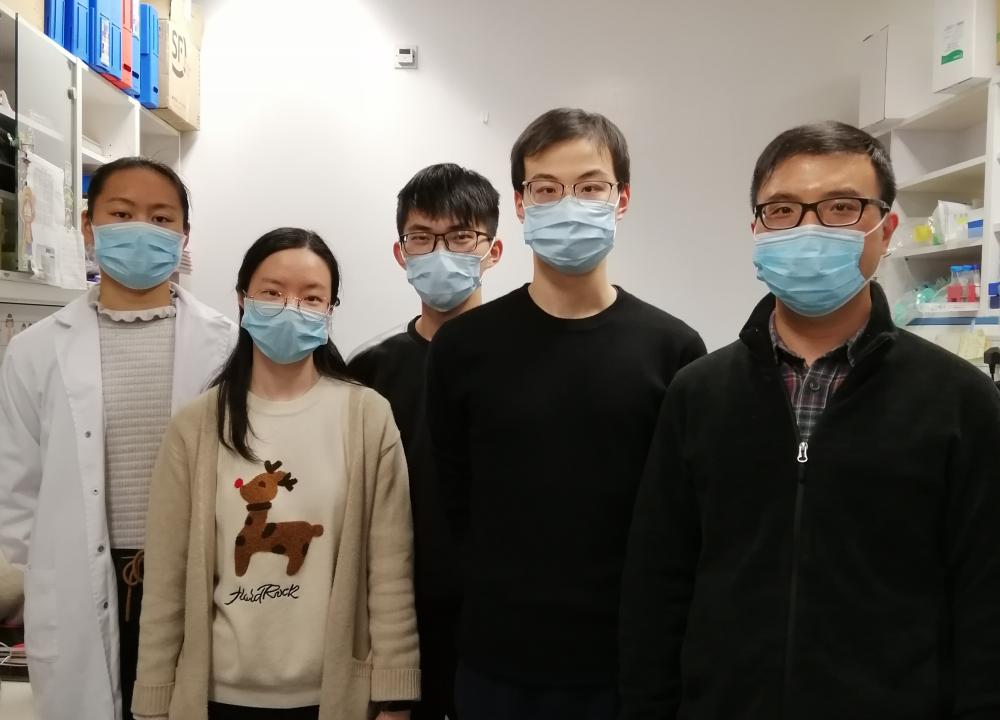
HKUST Researchers Discover a Novel Mechanism of Recruiting Arf Family Proteins to Specific Subcellular Localizations
Researchers of the Hong Kong University of Science and Technology (HKUST) recently uncovered a novel molecular mechanism that regulates the subcellular localizations of Arf proteins, shedding light on the mechanism underlying various inherited diseases and offering new insight to the treatment of them.
2020

News
HKUST Researchers Develop the World’s Strongest Polymer Nanomembrane
The Importance of Sustainable Polymer MaterialsPolymers are a fundamental component of modern life, used in a wide range of applications from packaging and textiles to medical devices and construction materials. The importance of polymers cannot be overstated, as they provide numerous benefits such as durability, flexibility, and resistance to chemicals and heat. However, the plastics industry has faced growing criticism in recent years due to its significant contribution to environmental pollution and waste management issues. As a result, there is an increasing emphasis on sustainability in the plastics industry, driven by evolving stakeholder expectations and environmental awareness. This shift towards sustainability is crucial for the long-term viability of the plastics industry, as it requires the development of innovative and eco-friendly strongest polymer materials that minimize environmental impact while maintaining performance and functionality.
News
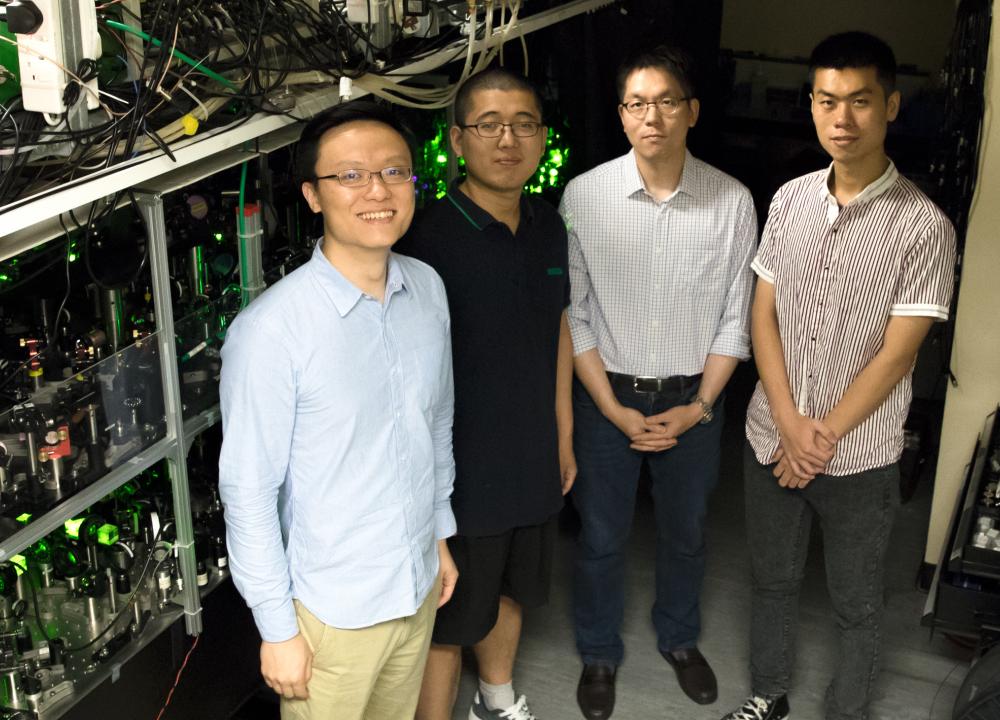
Physicists Quantum Simulate a System in which Fermions with Multiple Flavors Behave Like Bosons
Quantum simulations show that boson-like behaviours, so-called bosonization, emerge from an ensemble of fermions in three-dimensional systems, despite that bosons and fermions are governed by distinct quantum statistics.
In the text book of quantum mechanics, it was introduced that bosons and fermions, two types of elementary particles that build the universe, behave in a drastically different way. For example, bosons can share the same quantum state while fermions of the same kind cannot but fill available quantum states one by one.



News
New Method Identifies Adaptive Mutations in Complex Evolving Populations
A research team co-led by a scientist at the Hong Kong University of Science and Technology (HKUST) has developed a method to study how HIV mutates to escape the immune system in multiple patients, which could inform HIV vaccine design.
HIV, which can lead to AIDS, evolves rapidly and attacks the body’s immune system. Genetic mutations in the virus enable it to evade immune responses mounted by T cells and antibodies, which makes it all the more difficult to design an effective solution. While there is no effective cure for the virus currently available, it can be controlled with medication.
Now, the international research team has devised a new method from conventional statistical physics to reveal patterns of selection in HIV evolution using 14 patient data sets, providing a means to efficiently distinguishing the mutations that help the virus escape the immune system from those that are only random variations.

News
Building The Brain Behind Smarter Hong Kong
Prof. CHEN Kai, Associate Professor of Computer Science and Engineering, is now the brain behind what will become Hong Kong’s ‘brain’ in future – the next-generation artificial intelligence (AI) computing hub for the entire city that encompasses smart bus schedules, taxi dispatch, typhoon warning, medical diagnosis, fintech and others.
News
HKUST Scientists Make Breakthrough Discovery of New Therapeutic Targets for Alzheimer’s Disease
Researchers at the Hong Kong University of Science and Technology (HKUST) have identified new therapeutic targets for Alzheimer’s disease (AD) by studying the patients’ brain with a newly-developed methodology. This novel approach also enables researchers to measure the effects of potential drugs on AD patients, opening new directions for AD research and drug development.